
If you have $10,000 or $20,000 available, where should you put it?
For many homeowners, the obvious financial answer is the stock market. Invest the money, leave it alone, and let compound growth do the work.
A heat pump, better insulation, air sealing, or another energy-efficiency upgrade offers a different use for those funds: reducing an expense you already pay every month.
Solar deserves a place in this decision too. On a suitable home, rooftop solar replaces some purchased electricity with power generated on your property. Before committing all your available money to the market, find out how much of your electricity bill a properly designed system would offset.
How does a home upgrade differ from a stock investment?
An energy retrofit and a stock-market investment are fundamentally different.
Stocks are liquid financial assets. Their value rises and falls with the market. The Financial Consumer Agency of Canada explains the relationship between investment risk and potential returns, including the possibility of losing money.
An upgrade reduces household expenses when the new system or building improvement lowers energy use enough to offset operating costs. You also receive heating, cooling, comfort, and better control over your home's energy consumption.
Natural Resources Canada explains how heat pumps transfer heat rather than generate it, allowing them to deliver more heating energy than the electricity they consume. Actual household savings depend on climate, the system being replaced, equipment sizing, electricity and fuel prices, and how the system is operated.
Stocks offer potential financial growth. Energy improvements aim to reduce the money leaving your household while improving the home.
What should you consider on the stock-market side?

The stock market has historically rewarded long-term investors, although returns vary dramatically from year to year.
As of October 30, 2026, S&P Dow Jones Indices reported a 10-year annualized price return of approximately 13.6% for the S&P 500. This U.S. dollar price-return figure excludes dividends. A Canadian investor's outcome also depends on currency movements, investment fees, taxes and the investment selected. Different periods produce different results. Past performance does not guarantee future returns.
If you invest $15,000 in the market, the investment stays exposed to market fluctuations. You also retain an asset which you could sell later, although the sale price might be below your original investment.
Spend $15,000 improving your home and you no longer have a $15,000 investment account. You own the improvement and receive the resulting energy savings, comfort, equipment life and any property-value benefits. A resale premium is not guaranteed.
How do you calculate the energy-efficiency side?
Energy efficiency works best when you think about avoided expenses.
Suppose a homeowner spends $12,000 after rebates on an upgrade and the project reduces annual energy costs by $1,200. Those annual savings equal 10% of the initial cost, with a simple payback of 10 years before maintenance, financing, changes in energy prices and the time value of money.
This is an illustrative example, not a typical savings claim or a guaranteed investment return. A simple savings-to-cost ratio is not equivalent to a stock portfolio's annualized return. Real savings need to be calculated for the individual home.
Climate, heating load, existing equipment, fuel costs, sizing and control strategy all affect the result. Start with your own numbers:
- Annual heating and cooling costs today
- Estimated energy use after the upgrade
- Net project cost after confirmed rebates
- Expected equipment life and replacement costs
- Maintenance costs
- Any financing cost
Our home energy retrofit planning guide explains how to compare upgrade order, project scope and funding before choosing equipment.
Why put solar on your investment shortlist?
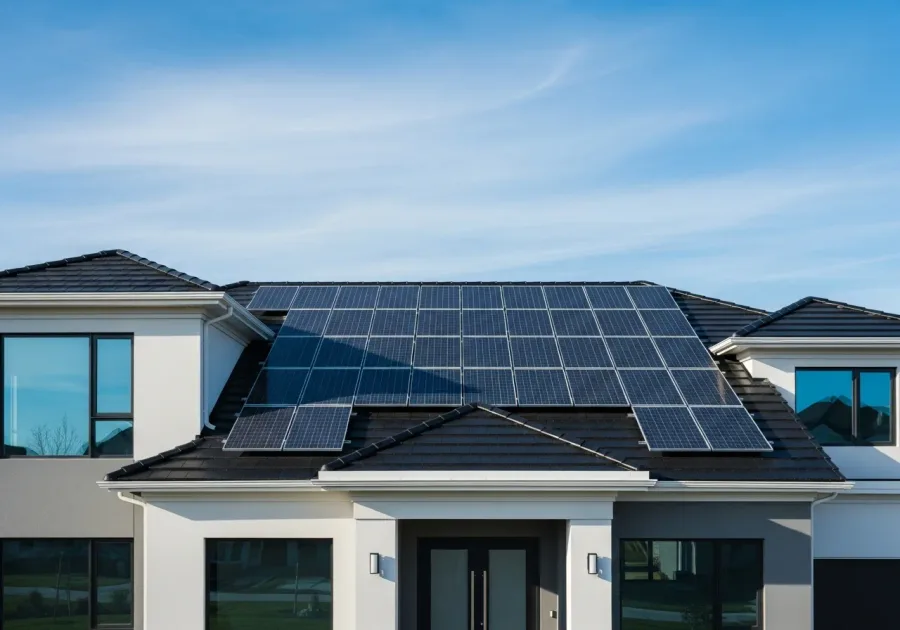
Your electricity bill is a recurring household expense. A suitable solar system directs part of your available capital toward reducing those future bills, rather than leaving the entire expense unchanged while you invest elsewhere.
Electricity used in your home offsets purchases from the grid. Where your utility allows exports, surplus generation earns credits under the applicable program rules. Fixed charges and electricity purchased when production is low still matter. Solar does not automatically eliminate the bill.
Those avoided purchases have an ongoing value. Higher electricity prices increase the value of each purchased kilowatt-hour you replace, although future rates and export-credit rules are not guaranteed. This gives solar a practical role in managing your household's exposure to electricity costs.
Consider a hypothetical solar project, not a quote or a typical Greenfoot result:
- Net installed cost after any confirmed incentives: $20,000
- Estimated first-year electricity-bill savings: $1,800
- Illustrative annual allowance for maintenance and future component replacement: $200
- First-year benefit after that allowance: $1,600, equal to 8% of the initial cost
At an unchanged $1,600 annual benefit, simple payback would be 12.5 years. This is not an 8% compounded investment return. Financing, production changes over time, component replacements, utility rules and the timing of cash flows affect the result. Your quote and production estimate need to support your own calculation.
There is also an opportunity to do both. If a paid-for system lowers your electricity spending, investing the money no longer spent on bills adds regular contributions to your portfolio. A financed system needs a separate cash-flow check, including the loan payment, before you assume money will be available to invest.
For a suitable home and an affordable project, lowering a recurring bill deserves serious consideration before putting every available dollar into the market. Start with a home-specific solar assessment. Compare roof condition, shading, expected annual generation, your electricity use, net cost, equipment warranties and local utility rules. Our residential solar guide explains how the system works.
| Comparison | Residential solar on a suitable home | Stock-market investing |
|---|---|---|
| Main financial benefit | Offsets purchased electricity, reducing a recurring household expense. | Seeks growth in the value of your investment and, for some holdings, dividend income. |
| Household cash flow | Bill savings free money for other priorities or investing after operating and financing costs. | Dividends or selling holdings provide cash. An increase in account value alone does not reduce your electricity bill. |
| Exposure to electricity prices | Self-consumed solar replaces some grid purchases. Its value depends on your retail rate. Export credits follow separate utility rules. | Your home keeps purchasing electricity unless you make a separate change. Portfolio performance does not directly control the bill. |
| Upfront support | Eligible rebates reduce project cost where programs are available and the homeowner, equipment and installation qualify. | TFSA and RRSP accounts offer different tax advantages, subject to eligibility and contribution rules. These are not installation rebates. |
| What affects the outcome | Sunlight, shading, system design, production, utility rates, equipment condition and financing. | Market movements, diversification, investment selection, currency, fees, taxes and timing. |
| Access to your money | Money becomes part of an improvement to your property. A resale premium is not guaranteed. | Publicly traded investments are generally easier to sell, although prices fluctuate and losses are possible. |
| Why consider both | A suitable system lowers a bill. Investing the resulting cash savings adds regular contributions to your portfolio. | Long-term investing continues with the money not committed to the solar project and any savings you choose to contribute. |
References: Natural Resources Canada: Solar energy, BC Hydro: Self-generation and the Financial Consumer Agency of Canada: Investing basics. BC Hydro is a provincial example, not a Canada-wide credit rule. This table compares how the options work, not guaranteed returns. The $20,000 solar calculation above uses hypothetical assumptions, not figures quoted by these sources.
How do rebates change the calculation?
An investor normally contributes their own money to purchase an investment. An eligible homeowner completing an energy retrofit might receive government or utility funding toward part of the cost.
In British Columbia, BC Hydro's Home Renovation Rebate Program lists support for qualifying heat pumps, insulation, windows, doors and heat-pump water heaters. Eligibility depends on the home, heating system, contractor, equipment and other program requirements.
Consider a simplified example:
- Project cost: $15,000
- Approved rebates: $5,000
- Homeowner's net cost: $10,000
If the improvement produces the same annual energy savings as a comparable $15,000 project without incentives, the homeowner recovers a smaller out-of-pocket cost through those savings.
Check insulation funding and eligibility and which Canadian retrofit programs are still open. Confirm the official rules before proceeding. Programs, amounts and requirements change. Do not treat an unapproved rebate as money already received.
What does leaving heat loss unfixed cost you?
Doing nothing is not always financially neutral.
If your home loses heat through an under-insulated attic, poorly insulated basement, air leakage or an inefficient heating system, you continue buying energy to compensate for the problem.

Natural Resources Canada notes heating and cooling account for roughly two-thirds of residential energy use. Poorly insulated basements alone account for as much as 20% of a home's heat loss in some circumstances.
Compare the cost of fixing a recurring expense with the cost of continuing to pay for wasted energy while investing elsewhere. Neither choice is free of trade-offs.
If you are unsure where to start, read our guide to choosing your first home upgrade and how to find and seal air leaks.
Where does comfort fit into the comparison?
A stock portfolio does not cool your bedroom during a heat wave, warm an uncomfortable basement, reduce drafts or replace an aging furnace.
Home improvements provide benefits which do not appear neatly in an investment-return calculation.
Natural Resources Canada's EnerGuide guidance identifies lower energy use, lower utility costs and improved comfort as potential outcomes of energy-efficiency improvements.
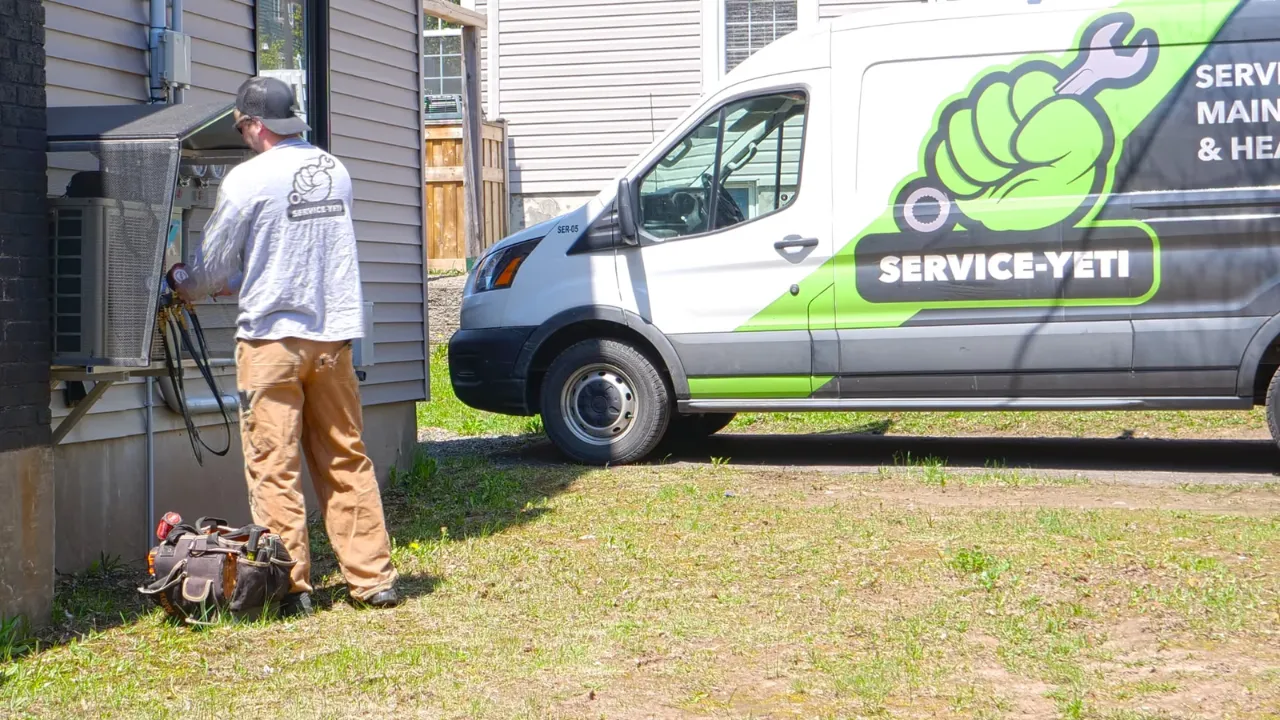
Some benefits affect your budget. Others affect how comfortable your home feels every day. Keep both in view without assigning an unsupported dollar value to comfort or resale.
When might investing still be the stronger choice?
There are plenty of situations where investing the money makes more sense.
- Your HVAC equipment already operates efficiently.
- Your home already has effective insulation and air sealing.
- The projected energy savings are small.
- You need access to your money.
- You have unused TFSA or RRSP room and a long investment horizon.
- You expect to move before recovering the upgrade cost.
Money invested in a diversified portfolio has the potential to keep compounding over a long period. Mechanical equipment eventually wears out.
Natural Resources Canada estimates a typical service life of roughly 15 to 20 years for air-source heat pumps. Actual lifespan depends on equipment, installation, maintenance and operating conditions.
Does the decision have to be all or nothing?
A homeowner with available capital might use part of the money to reduce a major recurring household expense and invest the rest. For example:
- $20,000 available
- $8,000 net energy-efficiency project after confirmed incentives
- $12,000 invested for long-term growth
If the home upgrade lowers monthly expenses, the homeowner could invest those savings regularly. Future investment growth still depends on market returns, fees, taxes and continued contributions.
What numbers do you need for your own home?
The strongest energy-efficiency project is not necessarily the biggest renovation. Choose improvements supported by the numbers for your property.
- Your current annual heating and cooling cost
- The equipment or building component responsible for the largest energy use
- Your estimated post-upgrade consumption
- Your net cost after confirmed rebates
- Expected maintenance, equipment life and financing costs
- How long you expect to own the home
- The alternative return and risk you realistically expect from investing the same money
BC Hydro requires qualifying heat-pump and insulation work under its Home Renovation Rebate Program to meet contractor requirements, including Home Performance Contractor Network membership for those categories. Check the rules for the specific program and project before signing.
Before investing every available dollar elsewhere, check whether your home offers a worthwhile way to reduce a bill you already pay. Fixing expensive heat loss and generating suitable rooftop solar give those funds a direct job in your household budget. Invest the savings if your finances allow.
Start with a home-specific scope and written estimate. Explore residential solar with Greenfoot or request an assessment for heating, insulation or solar. Ask for expected production or energy savings, the full installed cost and the assumptions behind the payback calculation.
This article provides general information, not personalized investment or tax advice. Examples are hypothetical. Energy savings, rebates, investment returns and resale benefits are not guaranteed. Consult a qualified financial professional about your own circumstances.
Questions about upgrades and investment returns
Is saving $1,200 a year on a $12,000 upgrade the same as earning 10% in stocks?
No. The annual bill savings equal 10% of the upfront cost in this simplified example. The upgrade is not a liquid investment account. Maintenance, financing, equipment replacement, changing energy prices and the timing of savings affect the comparison.
How do rebates affect the payback on an energy upgrade?
An approved rebate reduces the homeowner's net project cost. For example, $5,000 in rebates on a $15,000 project leaves a $10,000 net cost. Confirm eligibility, approval timing, contractor requirements and eligible equipment before committing.
Should solar panels be included in the comparison?
Yes. A suitable solar system reduces purchased electricity, freeing household cash for other priorities or regular investing. Solar generates power rather than reducing the building's energy needs. Compare the net installed cost, expected bill savings, maintenance, financing, roof condition, shading and local utility rules. Savings and investment returns are not guaranteed.
What information should I collect before choosing an upgrade?
Collect 12 months of energy bills, a home assessment, a written scope and quote, estimated post-upgrade consumption, confirmed incentives, maintenance and financing costs, and your expected ownership period. Compare those figures with your liquidity needs and investment options.