Short answer: A home is not “too airtight” simply because it has few drafts. Airtightness usually reduces energy waste and improves comfort. The concern is whether the home has enough planned ventilation to remove stale, humid air and supply fresh air. Condensation, mould, lingering odours, stuffy bedrooms, or persistent humidity are reasons to investigate—not proof of one specific cause.
Modern windows, insulation, weatherstripping, spray foam, and air-sealing work can make a home much less leaky. That is generally a good thing. Problems can appear when the house loses its accidental airflow but no one checks the bathroom exhaust, kitchen exhaust, combustion-air requirements, or whole-home ventilation.
Health Canada says airtight homes need mechanical ventilation for good indoor air quality. Natural Resources Canada also distinguishes controlled ventilation from random air leakage: cracks may waste heat without bringing fresh air to the rooms that need it.
Signs your home may need more ventilation
Look for patterns rather than one isolated symptom:
- Condensation on windows during winter
- Mould or damp areas around windows, bathrooms, or basements
- Cooking or bathroom odours that linger for hours
- Stuffy bedrooms in the morning
- Indoor humidity that stays high
- Musty basement smells
These signs can also come from a wet basement, roof leak, weak bathroom fan, blocked exhaust, or an envelope problem. Ventilation should be investigated alongside those possibilities rather than used as a cure-all.
Airtightness and ventilation do different jobs
Air sealing reduces uncontrolled movement through cracks, gaps, and penetrations. Ventilation brings outdoor air in and removes stale indoor air through a planned route. One does not replace the other.
Natural Resources Canada estimates that air leakage can represent a significant share of heat loss in a typical home. Leaving leakage open does not guarantee that fresh air reaches bedrooms, bathrooms, or other occupied spaces. A better building-science sequence is to seal unwanted leaks, then provide controlled ventilation where the house needs it.
This matters after major upgrades. A house that felt fine before new windows, attic insulation, spray foam, or weatherstripping may later show condensation or stale air because its old accidental airflow has changed.
Start with an assessment instead of guessing
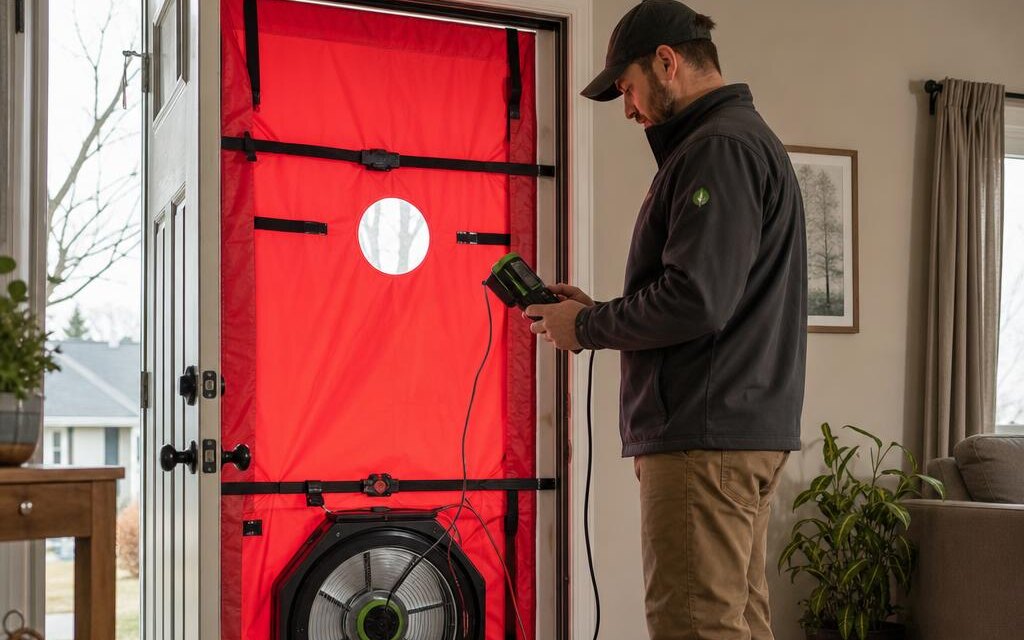
An EnerGuide home energy evaluation can include a blower door test. The test measures air leakage and helps locate major leakage areas. It can help answer:
- Where is heated or cooled air escaping?
- How airtight is the home after renovations?
- Are there depressurization or combustion-safety concerns?
- Does the ventilation system need balancing or a closer review?
Health Canada recommends measuring airtightness before adding a ventilation system to an existing home. Ask for the test results and a clear explanation of what they do—and do not—prove.
What an HRV or ERV does
A heat recovery ventilator (HRV), sometimes called an air exchanger, brings outdoor air in and sends stale air outside. Before the stale air leaves, the system transfers much of its heat to the incoming air.
An energy recovery ventilator (ERV) performs a similar exchange and also transfers some moisture between the two air streams. The right choice depends on the home, climate, humidity, and ventilation design. Balanced airflow matters: poorly commissioned equipment can change house pressure and reduce performance.
Greenfoot assesses homes and installs HRV and ERV systems across its service regions through its indoor air quality and ventilation service.
Why open windows are not a whole-home plan
Opening a window can provide short-term relief, but winter weather makes the approach inconsistent. Health Canada notes that window ventilation can increase heating or cooling costs and make humidity harder to manage. A bathroom fan, kitchen range hood, and whole-home ventilation system each have different jobs.
Mechanical ventilation gives you more control over how much air moves and where the exchange occurs. It should still be designed, balanced, maintained, and operated according to the equipment instructions.
Watch house pressure around exhaust fans
Range hoods, bathroom fans, dryers, fireplaces, wood stoves, and fuel-burning appliances all move air. In a tight house, large exhaust fans can create negative pressure if there is not enough makeup air.
That pressure can contribute to backdrafting at chimneys or fuel-burning appliances and raise carbon-monoxide concerns. Have combustion appliances and makeup-air requirements reviewed by a qualified professional. Keep smoke and carbon-monoxide alarms tested and maintained.
Ventilation does not replace radon testing
Radon is invisible and odourless. Health Canada’s guideline is 200 Bq/m³. Fresh-air ventilation may reduce radon in some homes, but Health Canada says ventilation has limited effectiveness for radon reduction.
Treat radon as a separate indoor-air-quality issue: test the home, and if results exceed the guideline, consult a certified radon professional about mitigation.
Humidity: too little and too much both matter
Winter condensation, damp surfaces, and mould can indicate excess indoor moisture. On the other hand, excessive ventilation during a cold winter can leave a home uncomfortably dry and increase heating demand.
- Run bathroom fans during and after showers.
- Use the range hood while cooking.
- Keep HRV or ERV filters clean.
- Follow the manufacturer’s maintenance schedule.
- Have airflow checked if condensation, dryness, or stale air continues.
A system moving too much or too little air may need adjustment. Do not change ventilation rates blindly; have the system assessed and balanced.
Programs vary by province
In New Brunswick, SaveEnergyNB currently lists a $200 incentive for an eligible ENERGY STAR heat recovery ventilator through the Total Home Energy Savings Program, along with qualifying air-sealing incentives. Check the official requirements before starting work.
In Nova Scotia, Efficiency Nova Scotia’s Home Energy Assessment helps identify leakage and other opportunities before upgrades. The assessment and rebate steps have eligibility and timing requirements.
PEI continues to provide home energy assessment information. Equipment incentive rules can change, so confirm current HRV and ERV eligibility before relying on a rebate.
Newfoundland and Labrador’s takeCHARGE HRV program lists current eligibility and incentive details. Verify the amount and requirements at the time of application.
British Columbia’s income-qualified Energy Savings Program requirements include ventilation-related conditions when paired with eligible upgrades. Assistance depends on income, property, equipment, and program rules; it is not guaranteed for every HRV or ERV project.
Where to start
If your home feels drafty, investigate air sealing and insulation. If it feels stuffy, shows winter condensation, or develops moisture problems after upgrades, investigate ventilation. For a newer or renovated home, an EnerGuide evaluation and blower door test provide a better starting point than guessing.
Review bathroom and kitchen exhaust, indoor humidity, combustion appliances, carbon-monoxide protection, radon, and whole-home ventilation together. If several issues appear at once, a coordinated building-performance and indoor-air-quality assessment is usually more useful than treating one symptom in isolation.
For professional help, visit Greenfoot’s Indoor Air Quality & Ventilation service page.