

Greenfoot Team
Russell
Smith.
Chief Margin Officer
Russell Smith is Chief Margin Officer at Greenfoot Energy Solutions, where he leads pricing, packaging, and profitability across the company's heat pump, solar, insulation, and service divisions. Russell joined Greenfoot in 2020 as a Digital Media Creator before stepping into the National Sales Manager role from 2021 to 2026, building out the residential and commercial sales teams across New Brunswick, Nova Scotia, Prince Edward Island, Newfoundland and Labrador, and British Columbia. Before Greenfoot, Russell spent 16 years as a Lead Teacher with the Anglophone East School District in Moncton, and ran his own video production company, Beacon Hill Productions, telling stories that move communities forward. He holds a Master of Education in School Counselling and Guidance and a Bachelor of Science in Biology, both from the University of New Brunswick. Russell is the host of Greenfoot's energy advice video series, where he walks homeowners through the real-world products, retrofits, and decisions that lower bills and improve comfort.
Author
Russell

What Has Russell Written About?
Browse the latest articles and guides published by Russell Smith on energy efficiency, heat pumps, and home comfort.
Heat Pump Snow Covers: Are They Worth It in Canada?
Roof snow, falling ice and freezing rain can expose your outdoor unit to more than a Canadian winter. Find out when a snow cover helps and how to preserve airflow.
Read article →Appliances: Energy Pigs and How to Spot Them
An old refrigerator, long dryer cycles, and electronics in standby can quietly add to your electricity bill. Find the biggest energy users and the practical changes that matter.
Read article →Air Leakage: How to Find It and How to Seal It
Air leakage control is the first retrofit Natural Resources Canada recommends. Learn where leaks hide, how to find them, which material seals each gap, what never to seal, and which provincial programs help pay for the work.
Read article →Convection vs. Conduction: What Does It Mean for Your Appliances?
Conduction transfers heat through contact. Convection moves heat with air or liquid. Understanding the difference makes appliance labels and home-energy choices easier to compare.
Read article →Is My House Too Airtight? A Practical Canadian Homeowner Guide
A tight home can save energy, but it still needs a planned path for fresh air. Here is how to investigate condensation, stale air, humidity, and ventilation safely.
Read article →Single-Zone vs Multi-Zone Heat Pumps in Canada: Which System Fits Your Home?
A practical Canadian guide to choosing between several independent single-zone heat pumps and one shared multi-zone system.
Read article →Why Heat Pump Minimum Output Matters More Than Most Homeowners Expect
A practical guide to minimum heat-pump output, cycling, room loads, and the equipment questions to ask before accepting a quote.
Read article →Do Multi-Zone Heat Pumps Work in Canadian Winters?
A Canadian guide to evaluating multi-zone heat pumps for winter comfort, including local climate, room loads, defrost, backup heat, and the case for independent or hybrid layouts.
Read article →Single-Zone vs Multi-Zone Heat Pump Cost in Canada
A practical guide to comparing equal-scope single-zone and multi-zone heat-pump quotes without relying on fixed national prices or payback promises.
Read article →One Heat Pump Outdoor Unit or Several?
One shared outdoor unit can simplify a constrained exterior, while several independent systems can improve service isolation and operating flexibility. The right architecture follows the home, not a universal rule.
Read article →Heat Pump Sizing and Room-by-Room Load Calculations in Canada
A practical Canadian guide to room-by-room heat-pump sizing, CSA F280 inputs, equipment capacity, airflow, commissioning, and questions to ask before accepting a proposal.
Read article →Home Battery vs. Standby Generator in British Columbia: Which Backup System Is Better?
British Columbia homeowners increasingly compare two very different backup-power tools: a home battery and a standby generator. A battery is quiet, fast and useful for short outages or selected circuits. A generator can provide longer-duration power when fuel is available.
Read article →Portable vs. Standby Generators in British Columbia: Which Is Right for Your Home?
A portable generator and a whole-home standby generator can both provide power during an outage, but they solve different problems.
Read article →What Size Generator Do You Need for a British Columbia Home?
Generator size is not determined by square footage alone. A compact rural home with electric heat, a deep-well pump and a sump pump can require more backup capacity than a larger city home with gas heat and municipal water.
Read article →How Much Does a Whole-Home Generator Cost in British Columbia?
The cost of a whole-home generator in British Columbia depends on much more than the generator's advertised price. The final project can include the standby unit, automatic transfer switch, electrical work, gas or propane work, permits, a prepared base, trenching, load-management controls, commissioning and ongoing maintenance.
Read article →British Columbia Storm Season Generator Checklist: How to Prepare Before an Outage
In British Columbia, storm preparation is not only about flashlights and bottled water. A long outage can stop the systems that protect the home itself: heating or cooling equipment, sump pumps, rural well pumps, refrigeration, home offices, communications and medical devices.
Read article →Backup Power for Rural and Coastal Homes in Newfoundland and Labrador
Backup power has a different role in a rural or coastal Newfoundland and Labrador home. An outage may interrupt heating, private water, septic equipment, refrigeration and communications at the same time. Long distances, exposed roads and severe weather can also delay travel, fuel delivery and restoration.
Read article →Portable vs. Standby Generators in Newfoundland and Labrador: Which Is Right for Your Home?
A portable generator and a whole-home standby generator can both provide power during an outage, but they solve different problems.
Read article →What Size Generator Do You Need for a Newfoundland and Labrador Home?
Generator size is not determined by square footage alone. A compact rural home with electric heat, a deep-well pump and a sump pump can require more backup capacity than a larger city home with gas heat and municipal water.
Read article →How Much Does a Whole-Home Generator Cost in Newfoundland and Labrador?
The cost of a whole-home generator in Newfoundland and Labrador depends on much more than the generator's advertised price. The final project can include the standby unit, automatic transfer switch, electrical work, gas or propane work, permits, a prepared base, trenching, load-management controls, commissioning and ongoing maintenance.
Read article →Newfoundland and Labrador Storm Season Generator Checklist: How to Prepare Before an Outage
In Newfoundland and Labrador, storm preparation is not only about flashlights and bottled water. A long outage can stop the systems that protect the home itself: electric or oil-heating controls, well pumps, sump pumps, septic systems, refrigeration, communications and medical equipment.
Read article →Propane Generator Fuel Planning for PEI Power Outages
On Prince Edward Island, a propane standby generator can provide automatic backup power where a property does not have a piped natural-gas connection. The generator decision, however, is only half of the plan.
Read article →Portable vs. Standby Generators in Prince Edward Island: Which Is Right for Your Home?
A portable generator and a whole-home standby generator can both provide power during an outage, but they solve different problems.
Read article →What Size Generator Do You Need for a Prince Edward Island Home?
Generator size is not determined by square footage alone. A compact rural home with electric heat, a deep-well pump and a sump pump can require more backup capacity than a larger city home with gas heat and municipal water.
Read article →How Much Does a Whole-Home Generator Cost in Prince Edward Island?
The cost of a whole-home generator in Prince Edward Island depends on much more than the generator's advertised price. The final project can include the standby unit, automatic transfer switch, electrical work, gas or propane work, permits, a prepared base, trenching, load-management controls, commissioning and ongoing maintenance.
Read article →Prince Edward Island Storm Season Generator Checklist: How to Prepare Before an Outage
In Prince Edward Island, storm preparation is not only about flashlights and bottled water. A long outage can stop the systems that protect the home itself: well pumps, sump pumps, heating controls, refrigeration, farm or rural water systems and communications.
Read article →Generator Installation and Permit Requirements in New Brunswick
Installing a standby generator in New Brunswick is an electrical and fuel-system project, not a simple appliance delivery. The generator must be sized, placed, connected through approved transfer equipment, permitted, inspected and commissioned before it becomes part of the home's emergency system.
Read article →Portable vs. Standby Generators in New Brunswick: Which Is Right for Your Home?
A portable generator and a whole-home standby generator can both provide power during an outage, but they solve different problems.
Read article →What Size Generator Do You Need for a New Brunswick Home?
Generator size is not determined by square footage alone. A compact rural home with electric heat, a deep-well pump and a sump pump can require more backup capacity than a larger city home with gas heat and municipal water.
Read article →How Much Does a Whole-Home Generator Cost in New Brunswick?
The cost of a whole-home generator in New Brunswick depends on much more than the generator's advertised price. The final project can include the standby unit, automatic transfer switch, electrical work, gas or propane work, permits, a prepared base, trenching, load-management controls, commissioning and ongoing maintenance.
Read article →New Brunswick Storm Season Generator Checklist: How to Prepare Before an Outage
In New Brunswick, storm preparation is not only about flashlights and bottled water. A long outage can stop the systems that protect the home itself: well pumps, sump pumps, septic or lift pumps, heating equipment, refrigeration and communications.
Read article →Propane vs. Natural Gas Generators in Nova Scotia: Which Fuel Fits Your Home?
Natural gas and propane can both fuel an automatic standby generator, but the right choice for a Nova Scotia home depends on what is available at the property, how long outages tend to last and how the household wants to manage fuel.
Read article →Portable vs. Standby Generators in Nova Scotia: Which Is Right for Your Home?
A portable generator and a whole-home standby generator can both provide power during an outage, but they solve different problems.
Read article →What Size Generator Do You Need for a Nova Scotia Home?
Generator size is not determined by square footage alone. A compact rural home with electric heat, a deep-well pump and a sump pump can require more backup capacity than a larger city home with gas heat and municipal water.
Read article →How Much Does a Whole-Home Generator Cost in Nova Scotia?
The cost of a whole-home generator in Nova Scotia depends on much more than the generator's advertised price. The final project can include the standby unit, automatic transfer switch, electrical work, gas or propane work, permits, a prepared base, trenching, load-management controls, commissioning and ongoing maintenance.
Read article →Nova Scotia Storm Season Generator Checklist: How to Prepare Before an Outage
In Nova Scotia, storm preparation is not only about flashlights and bottled water. A long outage can stop the systems that protect the home itself: sump pumps, rural well pumps, refrigeration, heating-system controls, home offices and medically necessary equipment.
Read article →Whole-Home Generators in Canada: Backup Power, Storm Preparation, Costs and Sizing (2026)
A whole-home standby generator starts automatically, runs on natural gas or propane, and can protect heating, sump pumps, well pumps, refrigeration and medical equipment — without the homeowner being present. Russell Smith covers the full decision: portable vs. standby, essential vs. optional loads, how to size an 18/22/26 kW system, how an automatic transfer switch works, natural gas vs. propane tradeoffs, provincial permit requirements in NS/NB/PEI/NL/BC, installed costs from $8,000 to $20,000+, maintenance requirements, and a complete storm-season preparation checklist.
Read article →HVAC Repair vs Replace: The $5,000 Rule
When an aging system breaks down, the repair-or-replace question can feel overwhelming. This guide walks through the $5,000 rule, the role of age and efficiency, and how to know when a repair is throwing good money after bad.
Read article →How Much Does HVAC Maintenance Cost in Canada?
HVAC maintenance is one of the lower-cost ways to protect an expensive system, but prices vary by equipment and region. This guide covers typical tune-up and diagnostic costs in Canada, what drives them, and how a maintenance plan can lower your total spend.
Read article →What to Ask an Insulation Contractor Before You Hire
Insulation work disappears behind walls and under attic boards, so the questions you ask before hiring matter. This checklist covers installer certification (CAN/ULC-S705 for spray foam), CCMC product listings, written quotes with R-values, air sealing, rebate program registration, warranty, old insulation removal, and proof of insurance and WCB, plus the red flags to watch for in Atlantic Canada and BC.
Read article →Insulation Rebates in Atlantic Canada and BC: A 2026 Guide
Insulation rebates are available across Atlantic Canada and BC through Efficiency Nova Scotia, NB Power's Total Home Energy Savings Program, efficiencyPEI, takeCHARGE in Newfoundland and Labrador, and CleanBC Better Homes. Most start with an EnerGuide home energy assessment. The federal Canada Greener Homes Grant is closed, and the Greener Homes Loan is closed as well. This guide explains how each program works and how to stack rebates.
Read article →Attic Insulation Removal Cost: When It Is Needed and What to Expect
Attic insulation removal is not always needed, but contamination from rodents, mould or water, plus suspected vermiculite, can make it necessary. This guide explains when removal makes sense, what it costs in Canada (roughly 1.50 to 2.50 CAD per square foot for clean vacuum removal, more for contaminated or hazardous material), the vacuum and decontamination process, and the critical caution to test for asbestos before disturbing vermiculite.
Read article →When to Use Spray Foam Instead of Blown-In Insulation
Spray foam and blown-in insulation both have a place, but the right one depends on the job. Choose closed-cell spray foam for rim joists, crawl spaces, damp basements, cathedral ceilings, thin walls and irregular cavities where air and moisture control matter. Choose blown-in for open attics, budget retrofits and drill-and-fill walls. This Canadian decision guide gives a clear checklist for Atlantic Canada and BC.
Read article →Best Attic Insulation for Cold Canadian Climates
In a cold Canadian climate, the best attic insulation is usually deep blown-in cellulose or fibreglass built to R-50 or R-60, installed after the attic floor is air sealed. Closed-cell spray foam is the smart pick for cathedral ceilings, no-attic roofs and sealing penetrations first. This guide covers NRCan R-values, ventilation and ice dam prevention for homes in Atlantic Canada and BC.
Read article →Spray Foam and the Building Code in Canada: What to Know
Spray foam is a plastic, so Canadian building codes require careful handling. Foam in living spaces usually needs an approved thermal barrier such as half-inch drywall, while attics and crawl spaces may allow an ignition barrier. Closed-cell foam must meet CAN/ULC-S705 and be applied by a certified installer, products often carry a CCMC evaluation, and vapour control still matters. Codes are adopted provincially across NS, NB, PEI, NL and BC.
Read article →What Is the Healthiest Insulation for a Home in Canada?
There is no single healthiest insulation. Cellulose and formaldehyde-free mineral wool are the easiest low-VOC choices for sensitive households, while fibreglass and properly cured spray foam are also safe to live with. This guide compares each material on VOCs, dust, moisture and safe installation, and explains why good ventilation and a careful, certified crew matter most for Canadian homes in Atlantic Canada and BC.
Read article →Does Spray Foam Insulation Affect Home Resale Value in Canada?
Spray foam can help or hurt resale value in Canada, and the deciding factor is documentation. A certified, code-compliant install that lowers energy bills is a real selling point that buyers and lenders like. Undocumented or uncertified foam, or foam hiding the roof deck, can raise inspection and financing questions. Keep certificates, warranty, and rebate paperwork to make foam an asset at sale time.
Read article →Why Are People Removing Spray Foam Insulation? An Honest Look
Online stories about ripping out spray foam are scary, but removal is uncommon and almost always traces back to a poor installation, not the product. This honest guide explains the real reasons foam gets removed, off-ratio mixing and odour, trapped moisture, inspection access, and undocumented installs at sale time, what removal costs in Canada, and how a certified install prevents it.
Read article →Spray Foam vs Blown-In Insulation Cost: A Canadian Price Guide
Blown-in cellulose or fibreglass is the most affordable insulation at roughly 1.50 to 2.50 CAD per square foot, open-cell spray foam sits in the middle, and closed-cell spray foam runs 3.50 to 7.00 CAD per square foot. This guide gives real Canadian cost ranges, worked examples for an attic, a wall retrofit and a rim joist, explains why closed-cell costs more, and shows how rebates in Atlantic Canada and BC lower the bill.
Read article →Spray Foam vs Blown-In Insulation: A Canadian Homeowner's Guide
Spray foam and blown-in insulation sound similar but behave very differently. Spray foam insulates and air seals in one step, while blown-in cellulose or fibreglass insulates affordably but needs separate air sealing. This guide compares R-value, cost, health, building code and resale, then shows which product belongs in your attic, walls, basement and crawl space, with Canadian pricing for Atlantic Canada and BC.
Read article →Replace Baseboard Heat with a Ductless Mini-Split Heat Pump: How It Works and How Much You Save
Electric baseboard heat is everywhere in Canadian homes, and it is one of the most expensive ways to heat a house: every kilowatt-hour in becomes one kilowatt-hour of heat, full stop. A cold-climate ductless mini-split heat pump moves heat instead of making it, delivering three to four kilowatt-hours of heat for every one you pay for, which is why ENERGY STAR Canada certified models can cut Maritime heating bills by 50 to 60 percent. Russell Smith walks through a real Greenfoot install: the placement walk-through, the wall bracket, the core drill, the outdoor compressor on aluminum stands, the line set, the vacuum and refrigerant charge, and the homeowner walkthrough at the end. Single-head installs take five to six hours. Typical Canadian cost is $4,500 to $7,500 before stacking provincial and federal rebates.
Read article →Drill and Fill Insulation for Older Homes in Canada: How Dense-Pack Cellulose Retrofits Work
Most Canadian homes built before 1960 have zero wall insulation, just bare cavities behind plaster and lath. Drill and fill solves that in a single day from the outside, with no interior demolition, by dense-packing the wall cavities with cellulose at 3.5 lb per cubic foot. Russell Smith walks through how the retrofit works, why dense-pack cellulose beats foam and fibreglass for old walls, the typical 15 to 25 percent heating savings, and which provincial rebates in NB, NS, PEI, NL, and BC apply.
Read article →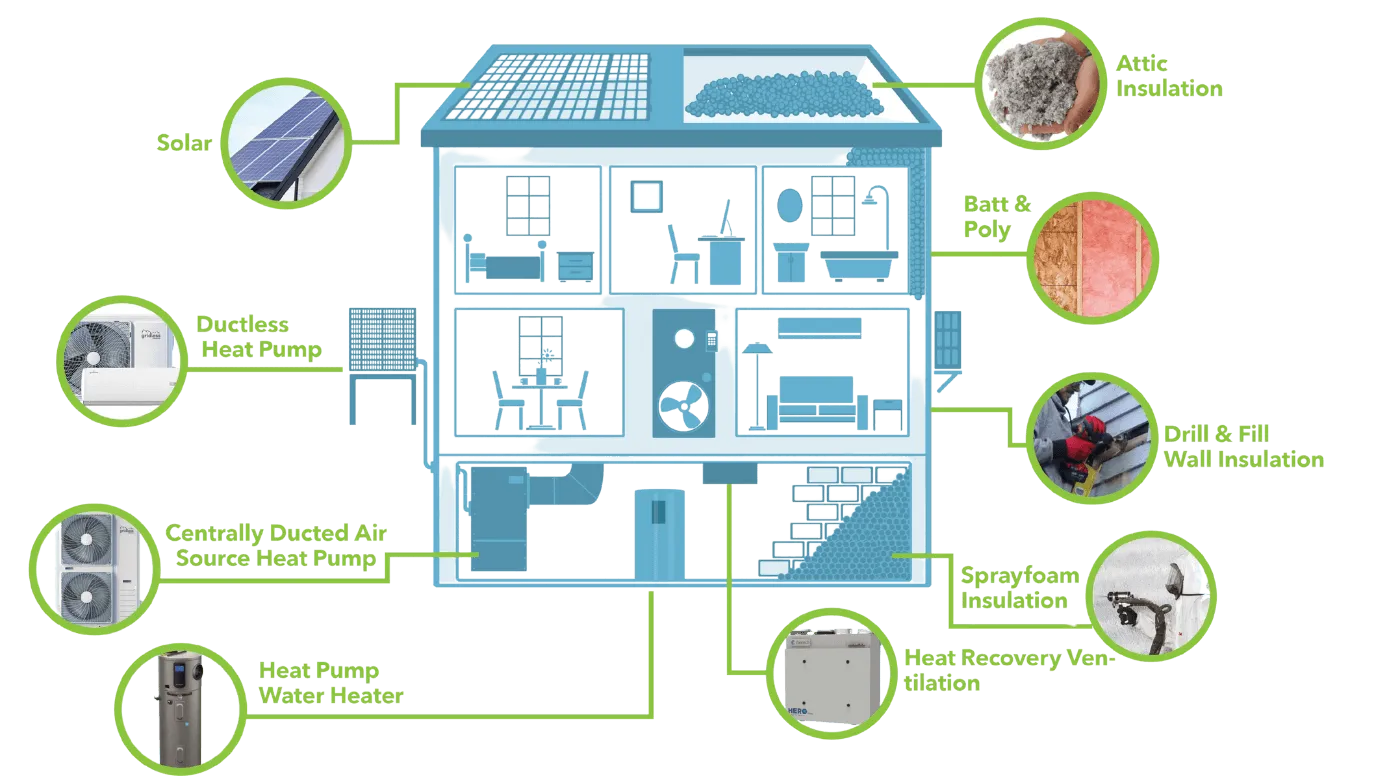
Invest In Your Home
Our experts have spent decades helping homeowners across Atlantic Canada and BC make smarter, longer-lasting investments in comfort and efficiency. From heat pumps and solar to insulation and air quality, we help you choose what's right for your home and your budget.
That is the Greenfoot approach!